
TheBlueWhale.ai Announces New Course ‘Top 12 AI Tools To Boost Your Productivity’

16 Apr 2026 Blog

AI tools are transforming the way individuals and businesses work by dramatically boosting productivity. AI can quickly analyze large volumes of data and uncover patterns that humans might miss. This helps businesses and individuals make smarter, data-driven decisions, whether it’s predicting customer behavior, optimizing marketing campaigns, or improving operations.

According to Sharad Agarwal, CEO of Cyber Gear, “By automating workflows and reducing the need for manual labor, AI tools help cut operational costs. They also make it easier to scale your efforts, handling more customers, content, or processes without a proportional increase in resources.”

Productivity Tools Covered:

1. Ranked.ai
2. Soundraw.io
3. Submagic.co
4. Creatorunlock.com
5. threadmaster.ai
6. keywordsearch.com
7. PicWish.com
8. Fastread.io
9. Syllaby.io
10. Genspark.ai
11. Hellowarrant.com
12. Webinarkit.com

On completion of this course, you will:

  • Use AI to create and refine content much faster
  • Automate administrative tasks, customer workflows, and research
  • Improve productivity across video editing, audio creation, and social content
  • Boost marketing performance with keyword, audience, and analytics tools
  • Learn how to build a personal productivity workflow using multiple AI tools
  • Apply AI to save hours each week and simplify complex tasks

Register online at https://www.thebluewhale.ai

The Blue Whale AI Academy is a Cyber Gear e-venture.

The Blue Whale symbolizes the vastness and depth of the ocean, representing the extensive and deep exploration of artificial intelligence.

The ROI Of SEO

10 Apr 2026 Blog

The Return on Investment of Search Engine Optimization is one of the most compelling reasons businesses continue to invest in digital marketing. Unlike paid advertising, where visibility disappears the moment you stop spending, SEO delivers long-term, compounding results that can significantly enhance profitability over time.

At its core, SEO focuses on improving a website’s visibility in organic search results. When your website ranks higher on search engines like Google, it attracts more relevant traffic without incurring direct costs per click. This makes SEO a cost-effective strategy compared to pay-per-click (PPC) campaigns, where each visitor comes at a price. Over time, the cost per acquisition through SEO tends to decrease, while the value generated continues to grow.

One of the key drivers of SEO ROI is high-intent traffic. Users who find your website through organic search are often actively looking for specific products, services, or information. This intent leads to higher conversion rates compared to many other marketing channels. For example, a user searching for “best CRM software for small business” is much closer to making a purchase decision than someone casually browsing social media.

Another important aspect is the longevity of SEO results. A well-optimized piece of content can continue to attract traffic for months or even years after it is published. This creates a compounding effect, where your initial investment keeps delivering returns long after the work is done. In contrast, paid campaigns require continuous funding to maintain visibility.

SEO also strengthens brand credibility and trust. Websites that appear on the first page of search results are often perceived as more authoritative and reliable. This increased trust not only drives more clicks but also improves customer retention and brand loyalty, further enhancing ROI.

Additionally, SEO provides valuable insights through analytics. Businesses can track keyword performance, user behavior, and conversion rates to refine their strategies continuously. This data-driven approach ensures that efforts are aligned with what works best, improving efficiency and maximizing returns.

However, it’s important to note that SEO is not an overnight success strategy. It requires time, consistency, and expertise. Initial investments in content creation, technical optimization, and link building may take several months to show significant results. But once momentum builds, the returns often outweigh the costs by a substantial margin.

The ROI of SEO lies in its ability to generate sustainable, high-quality traffic, improve brand authority, and deliver long-term value. While it demands patience and strategic execution, SEO remains one of the most powerful and cost-efficient digital marketing investments a business can make.

Contributed by GuestPosts.biz

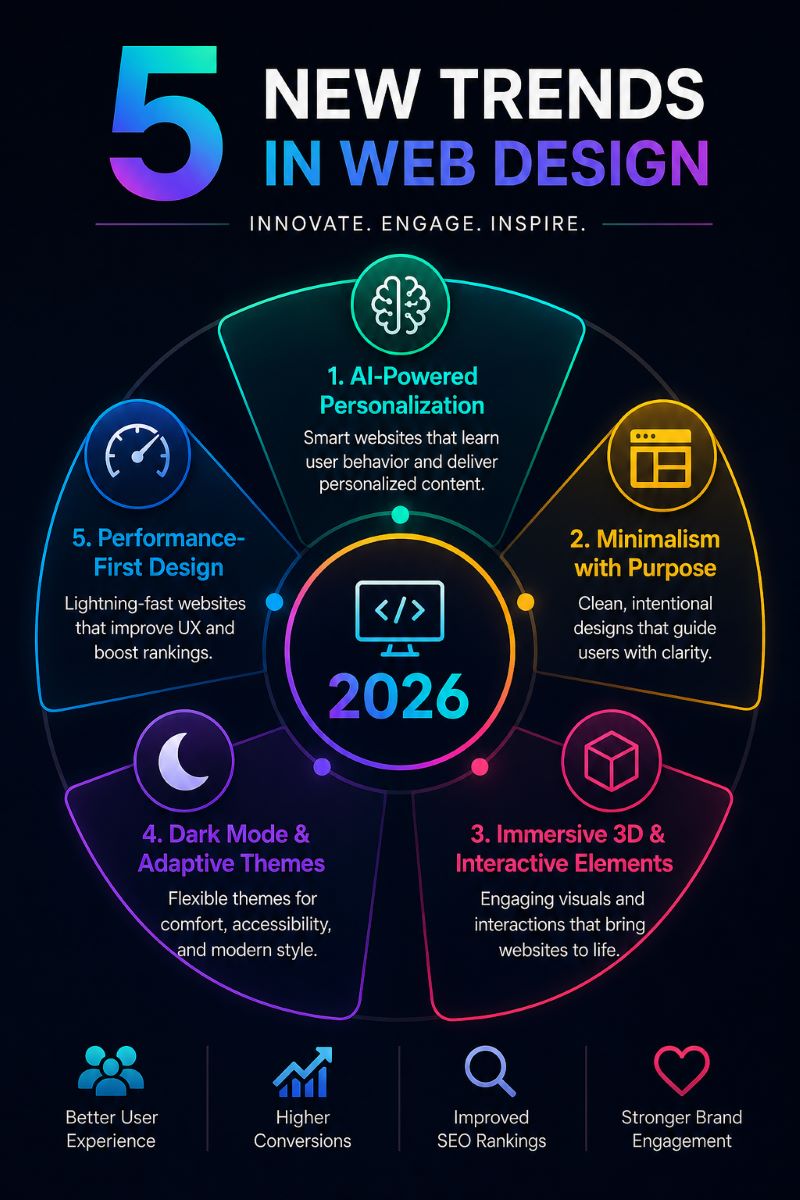
Cyber Gear Recommends Best Practices For Web Design In 2026

9 Apr 2026 Blog

Cyber Gear has been in the web design business since 1996. Based on 30 years of industry experience, the company has led from the front as technology has evolved to meet user expectations for speed, and the growing importance of accessibility and personalization.

Here are the key best practices to follow:

  1. AI-Driven Personalization

Modern websites leverage AI to tailor content, layouts, and recommendations in real time. By analyzing user behavior, websites can deliver personalized experiences that increase engagement, ‘stickyness’ and conversions.

  1. Mobile-First & Responsive Design

With almost 90% of users browsing on mobile devices, designing for smaller screens first is essential. Ensure your site adapts seamlessly across all devices, including handheld devices and wearables.

  1. Ultra-Fast Performance

Speed is critical. Optimize images, use lazy loading, and leverage modern frameworks to ensure pages load in under 5 seconds. Tools like Google PageSpeed Insights help identify performance bottlenecks.

  1. Accessibility (A11Y) by Default

Design for everyone, including users with disabilities. Follow guidelines from World Wide Web Consortium such as WCAG to ensure inclusivity. Use proper contrast, alt text, and keyboard navigation.

  1. Minimalist & Clean UI

Clutter-free designs with ample white space improve readability and user focus. Prioritize content hierarchy and intuitive navigation over flashy elements. Less is more!

  1. Dark Mode & Custom Themes

Offering light/dark mode options is now expected. Let users choose their preferred viewing experience to improve comfort and usability. Low radiation triumphs!

  1. Voice & Conversational Interfaces

With the rise of voice assistants like Google Assistant and Amazon Alexa, optimizing for voice search and integrating AI-chatbots enhances accessibility and engagement.

  1. Micro-Interactions & Motion Design

Subtle animations provide feedback and guide users through interactions. Keep them smooth and purposeful, not in the face!

  1. Strong Visual Storytelling

Use high-quality visuals, videos, and illustrations to communicate your brand story effectively. Authentic and human-centric design resonates more than stock-heavy pages. Testimonials build trust.

  1. Security & Privacy First

Users expect secure experiences. Implement HTTPS, data encryption, and transparent privacy policies. Compliance with global standards is mandatory.

  1. SEO/GEO-Integrated Design

Design and SEO/GEO go hand in hand. Use semantic HTML, structured data, and optimize for search engines like Google to improve visibility. Presence in AI-powered citations is a must.

  1. No-Code & Low-Code Integration

Tools like Webflow and Framer empower faster development and iteration without heavy coding.

According to Sharad Agarwal, CEO of Cyber Gear, “Web design in 2026 is no longer just about aesthetics, it’s about creating intelligent, inclusive, and high-performing digital experiences. Businesses that combine design with data, accessibility, and speed will stand out in an increasingly competitive digital landscape.As partners in expanding your business, every digital solution we bring to the table is backed by meaningful strategy, to enhance your brand presence and build an online community.”

For more information, visit https://www.cyber-gear.com/

How To Build A Future Proof Business In Times Of Crisis

8 Apr 2026 Blog

Building a future-proof business is no longer about predicting the future, it’s about preparing for constant change. The recent war in the region is a wake-up call for all. In a world shaped by global uncertainties, resilience and adaptability are the true competitive advantages.

At the core of any future-ready business lies customer-centricity. Companies that deeply understand their customers’ evolving needs are better positioned to stay relevant. This requires continuous feedback loops, data-driven insights, and personalized experiences. Businesses must move beyond simply selling products or services and instead focus on solving real problems and creating lasting value.

Equally important is embracing technology and innovation. From Artificial Intelligence to automation and data analytics, modern tools enable businesses to operate more efficiently and make smarter decisions. However, adopting technology is not enough—it must align with strategic goals. Organizations should foster a culture of experimentation, where innovation is encouraged and failure is seen as a learning opportunity rather than a setback.

Another key pillar is agility in operations. Future-proof businesses are flexible in how they operate, allowing them to quickly respond to market changes. This may involve adopting lean methodologies, decentralizing decision-making, or building scalable systems. Agility also extends to workforce management, organisations should invest in upskilling employees and cultivating a growth mindset across teams.

Diversification plays a crucial role in mitigating risk. Relying heavily on a single product, market, or revenue stream can be dangerous in uncertain times. By expanding offerings, entering new markets, or leveraging multiple channels, businesses can create stability and open new growth opportunities. Digital channels, in particular, have become essential for reaching wider audiences and ensuring business continuity.

In addition, strong brand identity and trust are vital assets. In an era of information overload, customers gravitate toward brands they trust. Transparency, ethical practices, and consistent communication help build credibility and loyalty. A purpose-driven brand that stands for something beyond profit is more likely to resonate with modern consumers and sustain long-term relationships.

Financial resilience is another critical factor. Maintaining healthy cash flow, managing costs effectively, and planning for contingencies can help businesses weather economic downturns. Future-proof companies are proactive in scenario planning and risk management, ensuring they are prepared for both opportunities and disruptions.

Lastly, sustainability and social responsibility are no longer optional. Businesses must consider their environmental and social impact as stakeholders increasingly demand accountability. Sustainable practices not only contribute to a better world but also enhance brand reputation and long-term viability.

Building a future-proof business requires a balanced approach—combining innovation with stability, agility with strategy, and growth with responsibility. Those who remain adaptable, customer-focused, and purpose-driven will not just survive the future—they will shape it.

Contributed by GuestPosts.biz

Storytelling In The Digital Age

6 Apr 2026 Blog

Storytelling in the digital age is essential for capturing attention, building trust, and creating meaningful connections. With endless content competing online, stories help brands and individuals stand out by making information memorable and emotionally engaging. They humanize data, simplify complex ideas, and inspire action. Through blogs, videos, and social media, storytelling drives engagement, boosts brand loyalty, and enhances communication. It also strengthens identity, allowing audiences to relate and respond. In a fast-paced digital world, storytelling transforms passive viewers into active participants, making messages more impactful, shareable, and influential across diverse platforms and audiences globally.

According to Sharad Agarwal, CEO of Cyber Gear, “We help you tell your story to the world.I sincerely believe that it is important to tell your story, else you will be a character in someone else’s!”

At Cyber Gear, we have 3 different divisions that help you promote your narrative:

  1. Traditional web business
  • Develop digital identity
  • Establish web presence
  • Build mobile apps
  • CRM solutions
  • Grow Social media network
  • Build online communities
  • SEO and linkbuilding
  • Digital marketing campaigns
  • Press release distribution
  • Media monitoring service

https://www.cyber-gear.com/

  1. Web3 division
  • Develop Metaverse Strategy
  • Tokenisation
  • Influencer Marketing
  • Host hybrid events
  • Organise corporate webinars

https://www.cyber-gear.io

  1. AI and Big Data
  • Build AI Agents
  • Conduct AI workshops
  • AI Training programs
  • Develop AI videos
  • AI Bots
  • Conversational AI
  • Generative Engines Optimisation (GEO)
  • Cybersecurity solutions

https://www.cyber-gear.ai

For more information, contact cyber-gear.com.

10 Powerful Link Building Tips And Tricks That Actually Work In 2026

25 Mar 2026 Blog

Guest Posting is an extremely popular method of expanding your digital footprint.

By posting your story on another person’s blog, not only will a company’s followers see its content, but anyone who follows the host website will see your content as well, thus reaching an audience that might be unaware of your brand.

These are some ‘Best Practices’ to follow to generate revenue from your web site.

  1. Create Link-Worthy Content

Not all content earns links. Focus on:

  • Original research & data studies
  • In-depth guides (ultimate guides)
  • Infographics & visual content
  • Free tools (calculators, generators)
  1. Guest Posting on High-Authority Sites

Still one of the best strategies when done right:

  • Target niche-relevant blogs
  • Avoid spammy marketplaces
  • Write genuinely valuable content
  1. Build Relationships, Not Just Links

Link building is outreach + networking:

  • Connect with bloggers on LinkedIn and X
  • Engage with their content before pitching
  • Personalize every outreach email
  1. Use Broken Link Building

Find broken links on websites and replace them with your content:

  • Use tools like Ahrefs or Screaming Frog
  • Reach out and suggest your link as a replacement
  1. Leverage HARO (Help a Reporter Out)

Respond to journalist queries and earn backlinks from media sites:

  • Use platforms like com
  • Provide expert insights
  1. Competitor Backlink Analysis

Implement what works:

  • Analyze competitors using SEMrush or Ahrefs
  • Find where they get backlinks
  • Replicate and improve their strategy
  1. Build Resource Page Links

Many sites have “resources” or “useful links” pages:

  • Search: “your niche + resources”
  • Pitch your content as a valuable addition
  1. Digital PR & Newsworthy Campaigns

Create buzz-worthy content:

  1. Internal Linking Optimization

Often overlooked but powerful:

  • Link between your own pages strategically
  • Use keyword-rich anchor text
  • Improve crawlability and rankings
  1. Create Skyscraper Content

Improve existing popular content:

  • Find top-performing articles
  • Make yours better (longer, updated, more visuals)
  • Outreach to sites linking to the original
  • Collaborate on podcasts & webinars

Link building in 2026 is less about quantity and more about:

  • Authority
  • Relevance
  • Trust

If you focus on value-driven content + real relationships, backlinks will follow naturally.

Dubai’s Future In Quantum Computing And Digital Innovation

10 Mar 2026 Blog

Dubai has always been a city that embraces cutting‑edge technology, and one of the most exciting areas of its future lies in quantum computing. While artificial intelligence and blockchain have already transformed industries, quantum computing promises to revolutionize problem‑solving, data analysis, and security in ways that traditional systems cannot. Dubai’s leadership recognizes this potential and is investing in research, partnerships, and infrastructure to ensure the city remains at the forefront of digital innovation.

Quantum computing is particularly powerful in solving complex problems that require massive computational power. Industries such as finance, healthcare, logistics, and energy stand to benefit. In finance, quantum algorithms can optimize portfolios and detect fraud more effectively. In healthcare, they can accelerate drug discovery and genetic research. Logistics companies can use quantum systems to streamline supply chains, while energy firms can model renewable systems with greater accuracy. Dubai’s role as a global hub for commerce makes these applications especially valuable.

Education and research are central to this vision. Universities in Dubai are expanding programs in quantum physics, computer science, and engineering, preparing graduates to contribute to the industry. Partnerships with international institutions bring expertise and resources, ensuring that Dubai remains connected to global advancements. Hackathons and innovation labs encourage experimentation, fostering a culture of creativity and collaboration.

Cybersecurity is another area where quantum computing plays a role. Traditional encryption methods may become vulnerable in the quantum era, but Dubai is exploring quantum‑safe systems that ensure digital safety. This aligns with the city’s broader ambition to be a leader in cybersecurity and digital trust.

The economic benefits are significant. By investing in quantum computing, Dubai attracts global companies, creates jobs, and diversifies its economy. Startups find opportunities to develop products and services, while established firms benefit from adopting advanced technologies.

Ultimately, Dubai’s future in quantum computing reflects its identity as a city of ambition and progress. By integrating quantum systems into finance, healthcare, logistics, and cybersecurity, it is building a digital ecosystem that is advanced, inclusive, and globally inspiring. For residents, this means smarter services; for businesses, it means new opportunities; and for the world, it means a model of how cities can embrace the quantum era.

AI and quantum computing are speeding up diagnosis, transforming drug discovery, and driving personalized medicine. They make it possible to quickly identify diseases, develop targeted treatments, and delve deeper into genetic information, resulting in more effective healthcare.Algorithms based on quantum power are improving risk models, detecting fraud better, and maximizing algorithmic trading. By analyzing huge amounts of data at record speed and accuracy, they make financial security tighter and smarter investment more possible.

Quantum computing is pushing developments in the optimization of renewable energy, battery storage, and climate modelling. All these developments promote the adoption of clean energy sources, power grid efficiency, and global sustainability measures.Quantum computing is revolutionizing production processes, logistics, and materials science. With optimized supply chains, minimized inefficiencies, and the ability to discover new, high-performance materials, quantum computing is creating a more sustainable and resilient manufacturing system.

  1. UAE is leading the way in quantum technology, heavily investing in research, infrastructure, and talent building. The summit highlighted the country’s strategic efforts, collaborations with international institutions, and its determination to become a quantum computing, quantum communication, and quantum sensing leader.
  2. Experts stressed the importance of cooperation among academia, industry, and government for hastening quantum advances. The conference opened discussion forums to stimulate innovation ecosystems, nurturing start-ups, and shaping regulatory models fostering quantum innovation in a responsible way.

Contributed by GuestPosts.biz

Is AI Meant To Simplify Life, Or To Make It More Complicated?

26 Jan 2026 Blog

When artificial intelligence is mentioned, most people feel two opposing emotions at the same time: the promise of great convenience and an equally strong sense of complexity. On one side, there are tools that speed up work and help use time more efficiently. On the other, constantly updated systems, endless learning requirements, and the anxiety of Am I falling behind?

So is AI really here to make life easier, or is it unintentionally making it more complicated?The answer does not lie in AI itself, but in how we approach it. By nature, AI is neither good nor bad; neither simplifying nor complicating. What gives it that role is how humans position it. Let’s explore this together. For more details, you can visit The Blue Whale AI Academy.

Where Does the Sense of Complexity Come From?

The feeling of complexity around AI rarely comes from the speed of technology itself. The real issue is how this technology is presented. AI is often described as an allpowerful force that can do everything and must be mastered in every area. New tools, new features, new termsone after another. Inevitably, people start thinking: I have to learn all of this.

This perception turns AI from a helpful assistant into a mental burden. Yet technology exists to reduce human load, not increase it. Complexity does not come from having too much AIit comes from a lack of focus.

What Is AI Actually For?

The core purpose of artificial intelligence is very clear: to make repetitive, timeconsuming, and energy-draining tasks easier for humans. Data analysis, content creation, planning, organizing ideasAI offers serious support in these areas.

However, there is a crucial point to remember. AI does not decide what is important. It does not set priorities. It does not tell you which task truly matters. These responsibilities still belong to humans. If a person does not know what they want, AI cannot provide a clear path. Instead, it may increase confusion by offering more options.

In other words, AI makes life easierbut only when it is placed in the right role.

The Problem Is Not Technology, but the Approach

Many people fall into the same trap when learning AI: I need to learn everything first. This mindset makes the process complicated from the very beginning. Learning without a clear need quickly becomes meaningless.

The better approach is simple: What problem do I have, and how can AI help me solve it? Once this question is asked, technology naturally becomes simpler. Unnecessary tools are eliminated, and the ones that truly add value stand out. AI stops being a burden and becomes a support system.

The Blue Whale Approach: Simplification

This is where platforms like TheBlueWhale make a real difference. The Blue Whale does not present AI with pressure to learn more. Instead, it embraces the idea of learn what is meaningful for you.

The platform does not overwhelm users with long lists of tools. First, it listens:

  • Who are you?
  • What do you do?
  • Where do you struggle?

A learning journey that starts with these questions naturally simplifies AI. Technology is adapted to human life; humans are not forced to adapt to technology. This approach makes AI accessible rather than overwhelming.

Why Is AI Easy for Some People?

Imagine two people using the same AI tools. One experiences increased productivity, while the other constantly feels stuck. Where is the difference?

It lies in expectations. Those who see AI as a magical solution that does everything feel disappointed. Those who see it as a thinking partner adapt quickly. This is the core mindset The Blue Whale teaches: AI does not think instead of youit thinks with you.

Once this perspective is adopted, confusion turns into clarity.

Fewer Tools, Better Use

In today’s world, the problem is not having too few toolsit’s having too many. Every new platform and feature adds learning pressure. Truly efficient people are not those who know every tool, but those who use a small number of tools extremely well.

That’s why TheBlueWhale rejects the learn everythingmindset. Instead, it teaches users how to choose the right tools for their own context and use them deeply. This simplifies AI and makes learning sustainable.

AI is not complexity itself; it is often simply misused. Artificial intelligence is not designed to make life more complicated. What makes it feel complex are our expectations, our learning methods, and our overall approach. When AI is positioned correctly, it reduces mental load, gives time back, and increases productivity.

The Blue Whaleapproaches artificial intelligence from exactly this perspective. It does not glorify technology, nor does it diminish people. Instead of placing AI at the center of life, it places it alongside the human. And perhaps that is why it becomes the platform of choice not for those who find AI confusing, but for those who want to simplify it.

Because in the end, the real issue is not how powerful artificial intelligence is, but how effectively we choose to use it.

Contributed by GuestPosts.biz

Artificial Intelligence For All

22 Jan 2026 Blog

Discussions about artificial intelligence usually begin in the same place: the future. Autonomous cities, machines that think like humans, systems that completely transform the workforce… On conference stages, in blog posts, and across social media, AI is often described as the technology of tomorrow. However, there is an important reality that is often overlooked: artificial intelligence is no longer a matter of the future, but of today. And for today’s people, these future-focused narratives are becoming increasingly insufficient.Because the main question people now ask is no longer, How will AI change the world? The real question is this: What can artificial intelligence make easier in my life today?

In this article, let’s explore that together. For more information and to start learning artificial intelligence today, you can visit The Blue WhaleAI Academy.

Future Stories Inspire, But They Don’t Teach

Futureoriented narratives can be exciting. Yet most of the time, they remain abstract. People listen to these stories, feel inspired, and then return to their daily lives. Because these narratives usually fail to answer one essential question: What can you do today?

Today’s individuals need guidance more than vision. Rather than AI’s potential, people are curious about how it can be used, where to start, and which problems it can solve. At this point, future scenarios fall short.This gap clearly shows that the way we talk about artificial intelligence needs to change.

Artificial Intelligence Is Not Just a Technology, but a Daily Skill

It is no longer possible to see artificial intelligence only as the domain of engineers or technology companies. Content creators, marketers, entrepreneurs, students, managers… AI now touches everyone’s work in some way.

Yet the problem is this: AI is still often presented as a technical specialty. Code, algorithms, and complex terminology take center stage. This causes many people to say This isn’t for mebefore they even begin.In reality, things are much simpler. When explained correctly, artificial intelligence is a skill that can be used in everyday lifejust like learning to use the internet or a smartphone. This is exactly where TheBlueWhalemakes a difference.

The Blue Whale: An Approach That Teaches Today Instead of Talking About the Future

The Blue Whale AI Academy, as a platform of the future, does not treat artificial intelligence as a distant scenario. Instead, it approaches AI as a tool that can be integrated into the lives of today’s people. Its core philosophy is built around one question: What does this knowledge give you today?

Here, AI is not presented as a theoretical subject. It is explained as a practical assistant that helps solve reallife problems. Rather than asking, What is artificial intelligence? the platform asks, How can you use artificial intelligence?This approach turns the learning process from something abstract into something tangible.

Learning Courage Instead of Fear of the Future

Future narratives often create fear. Questions like What if I fall behind? or What if my profession disappears? occupy people’s minds. The Blue Whale consciously avoids this fearbased language.

Instead, it makes users feel the following:

  • You don’t have to stay outside this transformation.
  • You don’t need to be an expert to start.

The platform’s tone is not judgmental, but encouraging. It presents artificial intelligence not as a cold, complex technology, but as a tool that can be learned and managed. This makes a significant difference, especially for those who feel distant from AI.

A Learning Model Designed for Today’s People

Traditional education models often focus on loading information. But for today’s people, time, attention, and motivation are far more valuable. TheBlueWhale.ai does not ignore this reality.

The platform transforms learning into an experience-based process that progresses in small steps. The user is not just a passive observer, but someone who thinks, experiments, and applies. The question I learned this, but what is it useful for? never goes unanswered.

Those Who Focus on Today, Not the Future, Will Win

In the age of artificial intelligence, the ones who stand out will not be those who predict the future best, but those who use today most effectively. Technology changes rapidly. Tools, platforms, and systems are constantly evolving.Yet one thing remains unchanged: the right way of thinking and learning.

At this point, TheBlueWhale.ai becomes more than an academy. Instead of talking about the future, it teaches the present. Instead of frightening people, it empowers them. It removes artificial intelligence from being a distant concept and turns it into a natural part of everyday life.

Talking about artificial intelligence only through the question what will happenis no longer enough. The real need is for clear and human answers to the question what can I do today?

TheBlueWhale is one of the rare platforms that provides this answer. It explains artificial intelligence to today’s people, in today’s language. And perhaps for this very reason, it goes beyond classic AI narratives and creates a real difference.

Contributed by GuestPosts.biz

Artificial Intelligence Academy Or Digital Awakening? TheBlueWhale AI Academy

20 Jan 2026 Blog

In the 21st century, when artificial intelligence is mentioned, what often comes to mind is still a world of complex codes, technical terms, and concepts that only experts can understand. However, the reality is quite different. Artificial intelligence is no longer just a topic of technology; it is the name of a new era that transforms our way of thinking, our working habits, and even our decisionmaking processes. Exactly at this point, TheBlueWhaleappears and makes us ask the following question: Is this an artificial intelligence academy, or a digital awakening?

In this article, let’s examine this topic together. For more details, you can visit The Blue Whale AI Academy.

Artificial Intelligence Is No Longer an Option

Today, staying away from artificial intelligence is like staying away from the internet. From marketing to education, from content creation to customer service, AI has already become part of everyday life. However, there is one major problem: everyone talks about artificial intelligence, but very few people truly understand it and know how to use it.

TheBlueWhaleemerges by recognizing this exact gap. The platform positions artificial intelligence not as a hardtoreach field of expertise, but as a skill that can touch everyone’s life.

More Than an Academy: A Shift in Perspective

Describing TheBlueWhale, which goes beyond technology, as a classic AI education platformwould be incomplete. Because the goal here is not only to transfer knowledge, but to give users a new perspective. The platform focuses not so much on the question What is artificial intelligence? but rather on What can artificial intelligence change in your life?

This approach takes the learning process out of theory and brings it directly into real life. Users can clearly see where and how they can use the knowledge they acquire. This transforms TheBlueWhale from an academy into a space of digital awareness.

Does the Language Used Really Make a Difference?

Yes. One of the most striking features of TheBlueWhale is the language it uses. While explaining artificial intelligence, the platform does not overwhelm users with technical jargon. Instead, it uses a simple, clear, and humancentered language.

Thanks to this, even users without a technical background do not feel excluded. On the contrary, the feeling of I can learn this too becomes stronger. Because here, artificial intelligence is not presented as something to be feared, but as a tool that everyone can use when explained correctly.

Memorization or Experience?

Of course, education that is close to experience and far from memorization is the most effective. Traditional education models often rely on rote learning. TheBlueWhale, however, turns learning into an experience. The user does not remain in the position of merely listening or watching; they think, try, and apply.

The content on the platform clearly shows how the learned knowledge will be useful in real life. The question What can I do after learning this? does not remain unanswered. This turns learning from an abstract process into a concrete gain.

Not the Same for Everyone, But Tailored to Each Individual

As can be understood, another strong aspect of TheBlueWhaleis that while it appeals to everyone, it does not evaluate everyone at the same level. While simple and basic explanations are offered for beginners, there are also areas for more advanced users to deepen their knowledge.

This flexibility personalizes the learning process. Users progress at their own pace and learn according to their own needs. Instead of turning learning into a competition, the platform treats it as an individual development journey.

Should Artificial Intelligence Be Seen as a Skill Rather Than a Profession?

In short, yes. TheBlueWhale does not present artificial intelligence solely as a new career field. It positions it as a powerful skill that can be integrated into every profession. For a marketer, it is a strategy development tool; for an entrepreneur, a timesaving support; for a student, a helper that makes learning easier.

This approach sets the platform apart from classic AI academies. The goal here is not to turn users into AI experts, but to make artificial intelligence a natural part of their lives.

Who Is at the Heart of the Digital Awakening?

Of course, TheBlueWhaleAI Academy. This platform does not present artificial intelligence as a distant scenario of the future. It addresses it as a reality of today. It places human needs at the center and shapes technology according to those needs.

For this reason, TheBlueWhale AI Academy is not just a platform that provides information; it is an awakening movement that aims to raise more conscious, more productive, and stronger individuals in the digital world.

Contributed by GuestPosts.biz

1 2 3 22

Search

+