
Growing Your Brand In The Age Of AI

12 Jan 2026 Blog

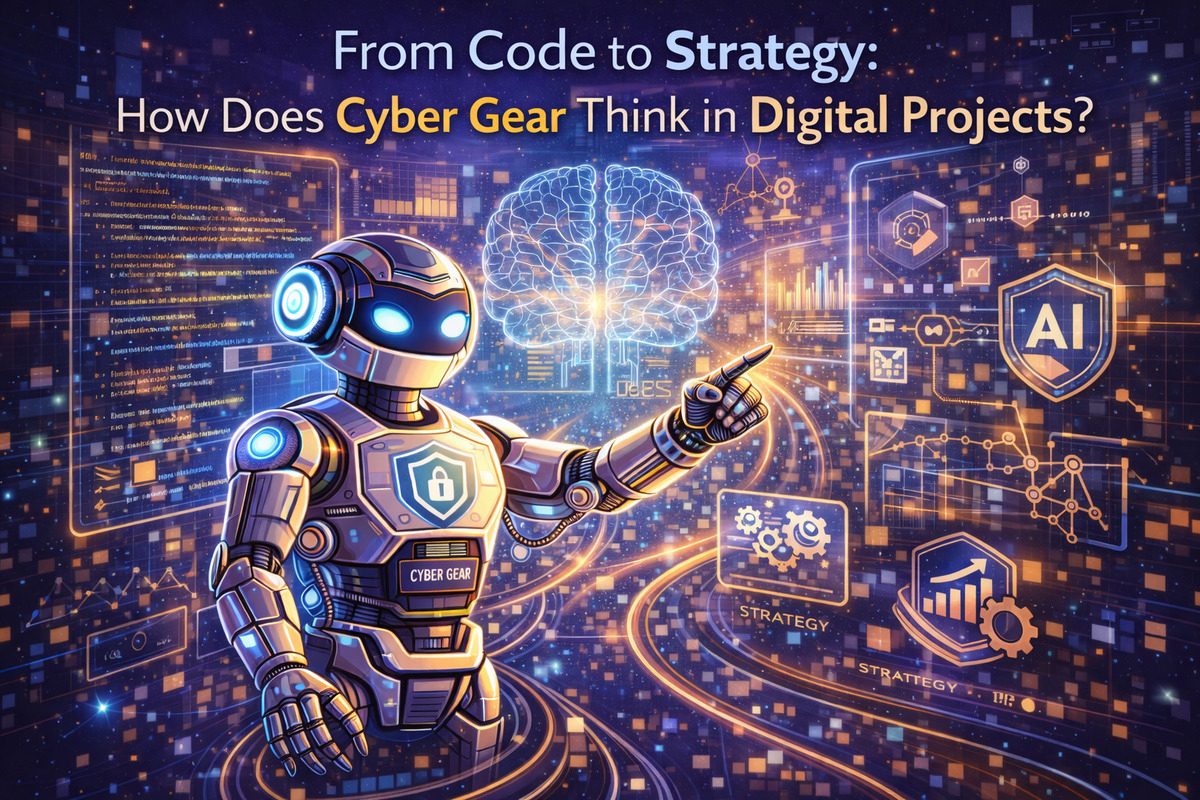
For many years, having a website was considered enough to be digital. Today, that definition has completely changed. Artificial intelligence (AI), Metaverse, Web3, and datadriven marketing solutions are fundamentally transforming how brands communicate with their target audiences. Keeping up with technology is no longer a choice but a necessity. In thistransformation process, Cyber Gear stands out with its innovative strategies that guide brands through their digital evolution. In this article, we will discuss how we can grow our brand in the age of AI. Let’s take a closer look together. For more details, you can visit Cyber Gear’s official website at Cyber-Gear.

A New Era in Digital Marketing: Smart and Experience-Driven Brands

Traditional digital marketing methods were built on static websites, broadly targeted advertisements, and oneway communication. However, in the age of AI and Metaverse, users expect personalized experiences, fast interaction, and meaningful connections. By adopting an approach that places these expectations at its core, Cyber Gear not only makes brands visible in the digital space but also turns them into an active part of the digital experience.

At the heart of Cyber Gear’s strategies lies the idea of using technology not merely as a tool, but as an element that strengthens brand identity. Through AI-powered analyses, user behaviors are examined in detail, and this data is transformed into brandspecific digital solutions.

Personalized Brand Experience with Artificial Intelligence

Today, AI is no longer anice-to-have. It sits at the very center of modern digital strategies. Cyber Gear enables brands to better understand their target audiences through AIbased systems. By analyzing users behavior on websites, interaction durations, interests, and purchasing habits, hyperpersonalized experiences are created.

Thanks to this approach, each user embarks on a journey tailored specifically to them with the brand. For example, AIdriven content recommendations, smart chatbots, and automated marketing systems significantly increase customer satisfaction while also boosting conversion rates. At Cyber Gear, artificial intelligence is seen as more than a technical tool; it becomes a bridge between the brand and the user.

A New Stage for Brands with the Metaverse

The Metaverse offers a new universe that removes the physical boundaries of the digital world. Cyber Gear develops strategies that aim not only for brands to exist in this new digital universe, but to take an active role within it. Virtual stores, digital events, interactive experiences, and three-dimensional brand spaces are just a few examples of Metaverse solutions.

Cyber Gear’s Metaverse approach is based on the principle that those who adapt early gain the advantage. In this new world, brands can build deeper connections with their target audiences and go beyond traditional advertising by creating an experiencedriven communication language. Especially for younger and tech-savvy audiences, the Metaverse makes brand interaction more engaging, entertaining, and memorable.

The Importance of Web3 and Digital Trust

Another topic that is just as important as AI and the Metaverse is Web3 technologies. Decentralized structures, data security, and transparency are among the issues that modern users value the most. Through its Web3 solutions, Cyber Gear aims to enhance the digital credibility of brands.

Solutions offered in areas such as blockchainbased systems, NFT projects, and digital asset management enable brands to invest not only in today but also in the future. By combining technological innovation with strategic planning, Cyber Gear supports the sustainable digital growth of brands.

The Balance of Strategy, Design, and Technology

One of the most important factors that sets Cyber Gear apart is its ability to harmoniously blend technology with creativity. When an innovative infrastructure, compelling design, and a strong strategy come together, the result is not only digital projects that look good but also ones that are truly functional.

Web design, user experience (UX/UI), SEO, digital marketing, and brand strategy are all integral parts of Cyber Gear’s holistic approach. Each project is carefully customized by considering the brand’s goals, industry, and target audience.

Succeeding in the age of AI is less about simply following technology and more about using it in the right way. At this point, Cyber Gear positions itself not only as an agency that provides services to brands, but also as a digital partner on their journey. In a constantly evolving digital world, it enables brands to remain flexible, innovative, and datadriven.

As we can clearly understand, Cyber Gear’s innovative strategies allow brands to stand out in the digital landscape, build strong connections with their target audiences, and move confidently toward the future. For brands that want to grow in the age of AI, CyberGear is not just a solution provider, but a strategic partner in digital transformation.

Contributed by GuestPosts.biz

How Are Cyber-Secure Websites Built With Modern Web Infrastructures?

10 Jan 2026 Blog

Today, having a website is no longer enough. Being fast, scalable, and user-friendly has become just as much of a necessity as being cyber secure. Modern web infrastructures offer great advantages thanks to cloud technologies, microservice architectures, and advanced frontend frameworks, while at the same time bringing new security risks. At this point, securitycentered approaches to the web development process and platforms specialized in this field come to the forefront. Cyber-Gear stands out as one of the structures that focuses exactly on this need. In this article, let’s examine cybersecurity-focused web infrastructures together. You can visit Cyber-Gear for further details.

What Is a Modern Web Infrastructure?

First of all, one of the topics we need to focus on is modern web infrastructures. They are built on flexible and modular systems, far from monolithic structures. On the frontend side, frameworks such as React, Vue, or Svelte are commonly used; on the backend side, services based on Node.js, Python, or Go are widely used. Most of these structures run in cloud environments and are continuously updated through CI/CD processes. However, this flexibility can lead to serious security vulnerabilities when misconfigured. Exposed APIs, weak authentication mechanisms, or neglected frontend security can easily turn a modern website into an easy target.

The Cornerstones of Secure Web Development

Building a cybersecure website is not merely about adding a security layer at the final stage. Security must be a part of the architecture from the very beginning of the project.

  1. SecurityFocused Architectural Design

While planning the infrastructure of the website, data flows and potential attack surfaces should be analyzed. In the approach adopted by Cyber-Gear, each component is designed according to the “least privilege” principle. In this way, even if a component is compromised, the entire system is prevented from being put at risk.

  1. Secure Frontend Development

Many developers evaluate the frontend only in terms of visual design and user experience. However, attacks such as XSS, CSRF, and clickjacking occur directly through the user interface. In modern websites, measures such as Content Security Policy (CSP) should be implemented, and every piece of data received from the user should be handled carefully.

Cyber-Gear considers frontend security not just as a technical requirement, but as a fundamental element of user trust. However, frontend security is only one part of the equation.

Backend and API Security

APIs form the backbone of modern web infrastructures. Mobile applications, web interfaces, and thirdparty services communicate through these APIs. This makes APIs an attractive target for attackers.

In a secure website, authentication and authorization must be clearly separated, tokenbased systems must be configured correctly, and rate limiting and logging must be active.
Cyber-Gear, on the other hand, aims to implement security measures without slowing down the system by addressing backend security together with performance.

Security in Cloud Infrastructures

Although cloud technologies accelerate web development, default settingsare often not sufficient. A misconfigured cloud service can cause all data to be exposed. For a cybersecure web infrastructure, server and service access must be restricted, environment variables and secret keys must be stored securely, and automated security scans must be run regularly.
Cyber-Gear aims to minimize these risks by offering specialized solutions for secure configuration and continuous monitoring in cloud infrastructures.

DevSecOps: Integrating Security into the Process

In traditional approaches, security testing is usually carried out at the end of the project. However, in modern web development, this approach is no longer sufficient. The DevSecOps mindset makes security a natural part of the software development process.

Code reviews, automated security tests, and continuous monitoring are among the core principles that Cyber-Gear also emphasizes. In this way, security becomes not an obstacle, but an element that enhances quality.

User Trust and Brand Value

A cybersecure website is critical not only for protection against attacks, but also for brand reputation. A data breach can destroy trust that has been built over years in a matter of seconds.By addressing web development and cybersecurity as a whole, Cyber-Gear contributes to businesses in creating web projects that are strong not only technically, but also perceptually.

As a result, modern web infrastructures offer great opportunities when used correctly. However, when security is overlooked, these opportunities can turn into serious risks. Cybersecure websites are made possible through conscious architectural design, secure coding practices, and continuous monitoring.

With its securitycentered approach in the modern web development world, Cyber-Gear aims to create web projects that are prepared not only for today’s threats but also for the risks of the future. In this new era where security is not an option but a standard, websites must now be not only fast, but also smart and secure.

Contributed by GuestPosts.biz

Dubai’s Future in Smart Sports Infrastructure and Athlete Development

6 Jan 2026 Blog

Dubai has already established itself as a global destination for sports, hosting tournaments and attracting athletes from around the world. But the next phase of its journey lies in smart sports infrastructure and athlete development. The city’s leadership recognizes that technology can transform how sports are played, experienced, and managed, and it has invested in projects that integrate innovation into every aspect of athletics.

Smart stadiums are at the heart of this vision. Equipped with advanced sensors, AI systems, and digital platforms, these venues provide seamless experiences for fans and athletes alike. Cashless payments, personalized services, and interactive screens make attending events more convenient and engaging. For athletes, smart stadiums offer real‑time performance data, helping coaches design strategies and optimize training.

Wearable technology is another key innovation. Devices monitor heart rate, movement, and recovery, providing insights that reduce injury risks and improve performance. Sports academies across Dubai are integrating wearables into their programs, preparing young athletes to embrace technology as part of their development.

Virtual reality and augmented reality are reshaping training. Athletes can practice in simulated environments, replicating game scenarios and improving decision‑making. Fans benefit too, with AR providing interactive content during matches and VR offering immersive experiences that bring them closer to the action.

Community engagement supports this vision. Parks, gyms, and sports clubs are adopting smart systems that encourage residents to embrace fitness. Apps track progress, provide motivation, and connect users to trainers. Inclusivity is a priority, with adaptive devices ensuring that people with disabilities can participate fully.

Education plays a vital role. Universities and training centers are offering programs in sports science, technology, and management, preparing graduates to contribute to the industry. Competitions and workshops encourage creativity, while partnerships with international organizations bring expertise and resources.

The economic benefits are significant. By investing in smart sports infrastructure, Dubai attracts global companies, creates jobs, and diversifies its economy. The city’s role as a hub for innovation ensures that these technologies can be exported to other regions, reinforcing its global influence.

Ultimately, Dubai’s future in smart sports infrastructure and athlete development reflects its ambition to be more than a host of events. It is a city where athletes, fans, and communities benefit from technology that enhances performance, engagement, and inclusivity. For residents, this means healthier lifestyles; for athletes, it means better training; and for the world, it means a model of how sports can evolve in the digital age.

Along with transforming sports infrastructure, smart city technologies have also revolutionized the sports betting industry. The rise of mobile applications, blockchain, and AI has opened up new possibilities for bettors, making the betting experience more efficient, secure, and user-friendly.

One of the key benefits of technology in sports betting is the ability to collect and analyze vast amounts of data in real time. AI-powered algorithms can analyze player statistics, match outcomes, and even environmental factors to provide more accurate predictions, helping bettors make informed decisions. This data-driven approach not only enhances the bettor’s experience but also creates a more transparent and fair betting environment.

Blockchain technology also plays a crucial role in ensuring the security and transparency of sports betting. With the implementation of smart contracts, bettors can be assured that their wagers are executed in a secure and automated manner, reducing the risk of fraud and ensuring that all transactions are accurately recorded.

The future of smart cities holds immense potential for further advancements in sports infrastructure and betting. With the development of more intelligent systems, cities and sports organizations can improve their sustainability, enhance fan engagement, and create safer, more enjoyable events. The evolution of betting platforms also promises to make sports betting more accessible, transparent, and rewarding for both casual and professional bettors.

Contributed by GuestPosts.biz

Blogs Help Generate Business Leads

5 Jan 2026 Blog

Blogging is one of the most effective long-term digital marketing strategies for building visibility, trust, and consistent traffic. When done strategically, a blog becomes more than content, it becomes a growth engine for your brand.Here are 10 key reasons why blogs are important for websites, especially for businesses and brands aiming to grow online:

  1. Improves Search Engine Optimization (SEO)

Blogs help websites rank higher on search engines by targeting relevant keywords, increasing indexed pages, and generating organic traffic over time.

  1. Drives Consistent Website Traffic

Each blog post creates a new entry point for users, bringing steady and long-term traffic compared to static web pages.

  1. Builds Authority and Credibility

Publishing informative and insightful content positions your website as an expert in your industry, earning user trust.

  1. Supports Content Marketing Strategy

Blogs serve as the foundation for content marketing, fueling social media posts, newsletters, and other digital campaigns.

  1. Engages and Educates Visitors

Blogs answer user questions, solve problems, and keep visitors engaged longer on your website.

  1. Generates Leads and Conversions

Strategic blog content with calls-to-action (CTAs) helps convert readers into leads, subscribers, or customers.

  1. Enhances Brand Awareness

Regular blogging keeps your brand visible and top-of-mind while reinforcing your brand voice and values.

  1. Improves Internal Linking Structure

Blogs allow you to link related pages, improving site navigation and helping search engines crawl your website efficiently.

  1. Encourages Social Sharing

High-quality blog content is easily shareable, increasing reach and driving referral traffic from social platforms.

  1. Delivers Long-Term Results

Unlike paid ads, blog posts continue to generate traffic, leads, and value months or even years after publication.

In a competitive digital landscape, businesses that invest in blogging gain visibility, authority, and sustainable growth.

Search

+